ai film

From Laptop to Cannes: Making "Luma Taxi" and "Luma Suds"

How a hybrid generative-AI workflow and the Luma Dream Brief turned two solo, cinematic experiments into official Cannes Lions entries.

I made two commercials completely by myself.

And now, thanks to an opportunity from the Luma Dream Brief, they are both headed to Cannes Lions as official entries.

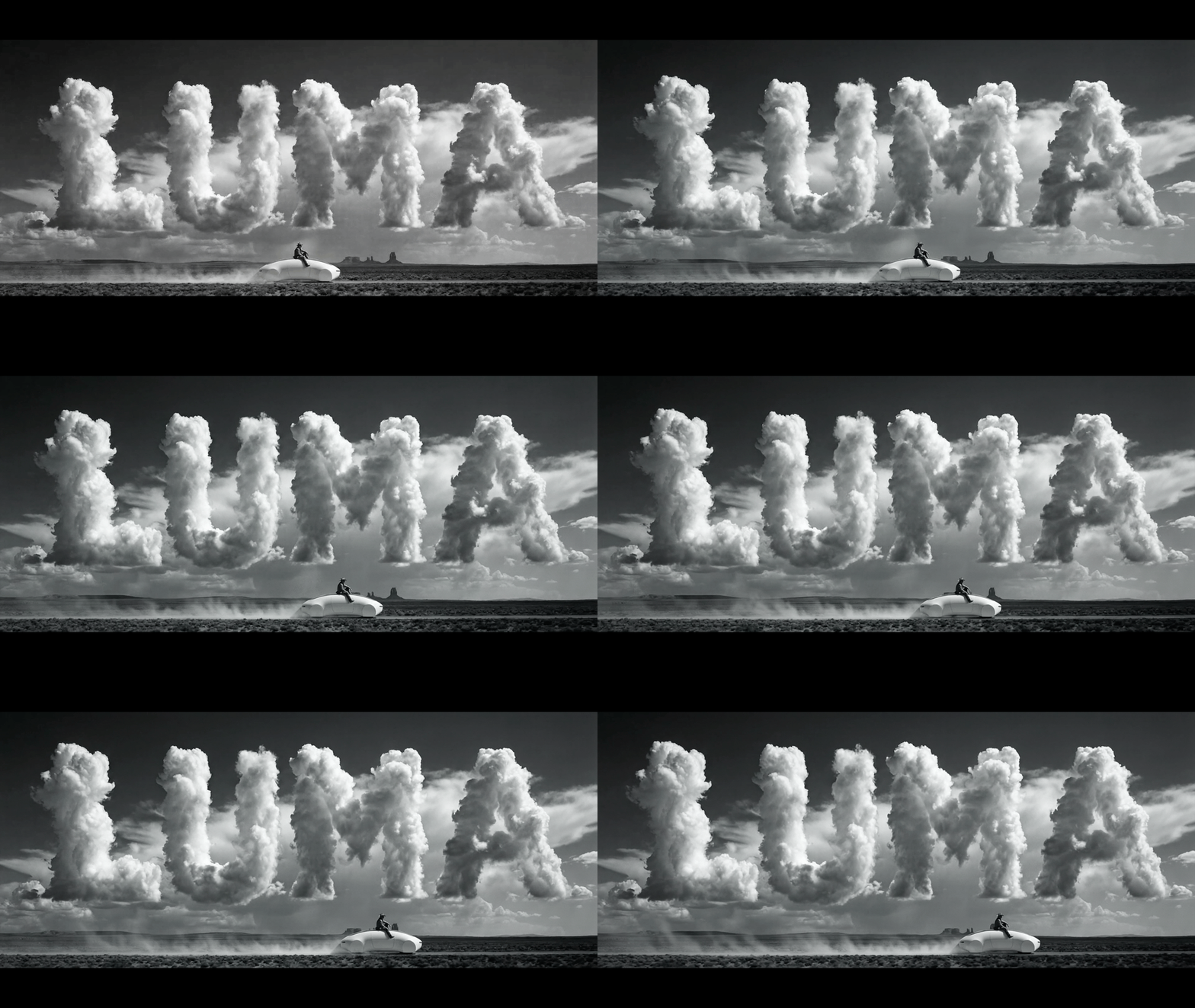
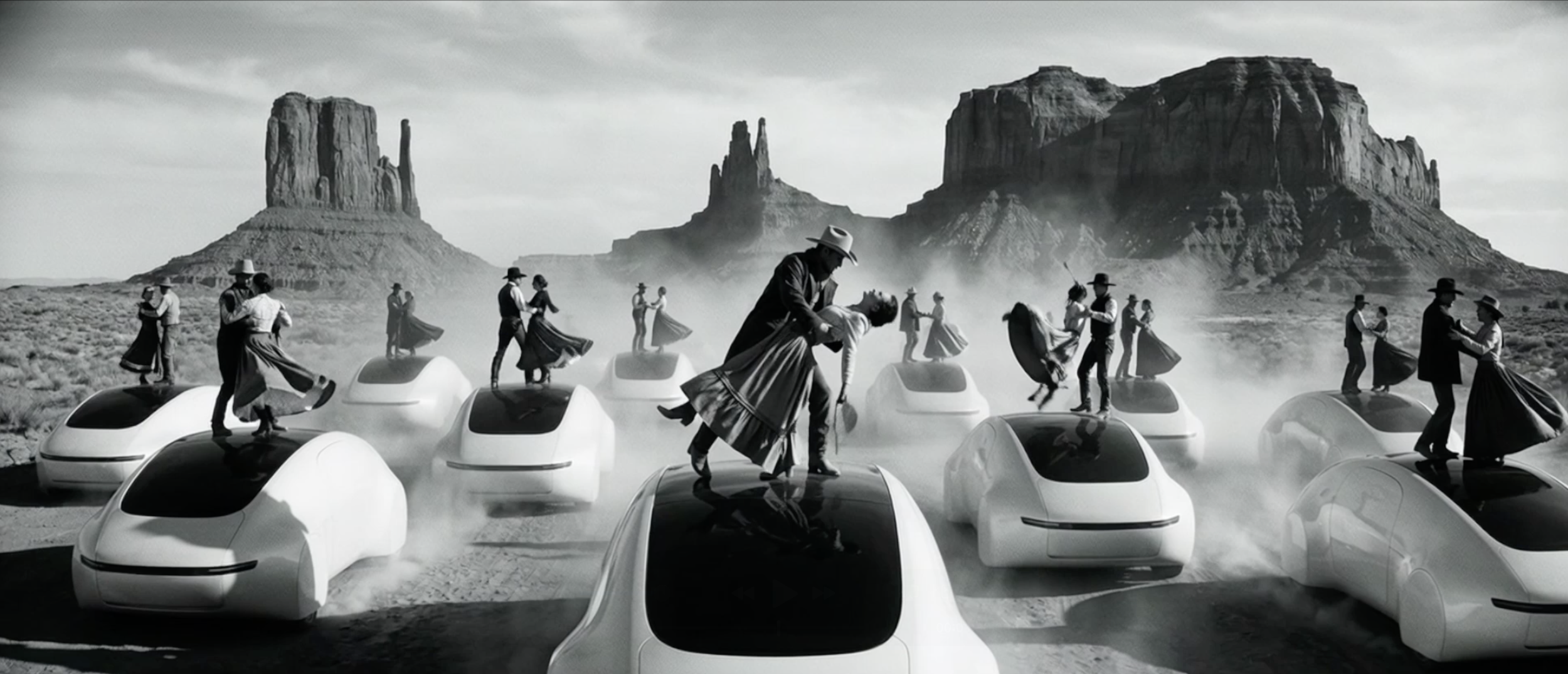
The first spot, Luma Taxi, was born from an idea I’ve had in my head for ages: drop futuristic tech into the Old West, and play it entirely straight. No winking at the camera, no lengthy explanations. Just cowboys and cowgirls operating as early adopters to a new technology and never looking back.

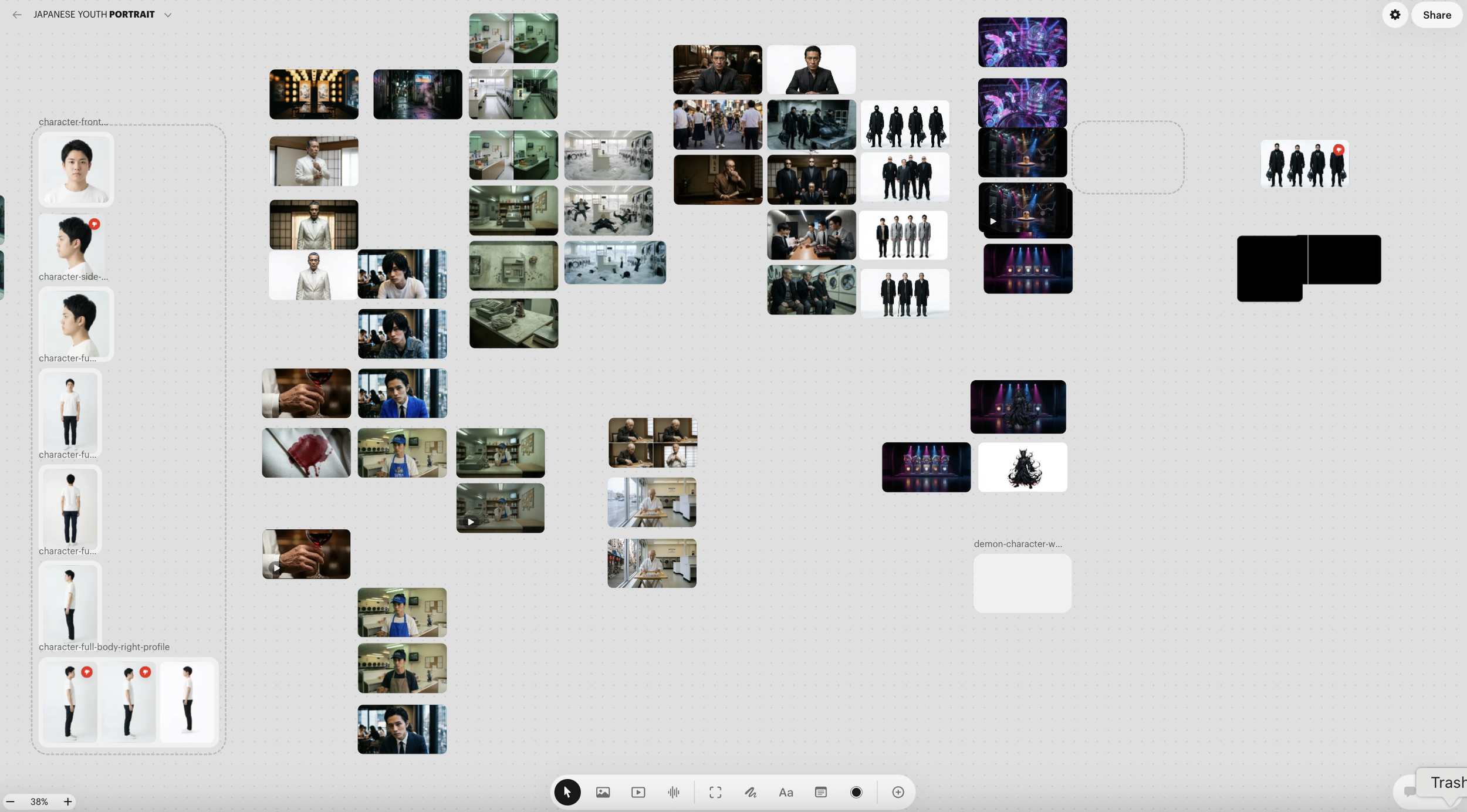
The second spot, Luma Suds, pulls from a deeply personal canon of world-building. Having spent over a decade living in Tokyo, I’ve constantly looked for ways to subvert the gritty, cinematic Japanese crime drama. I wanted to create a laundry detergent commercial with literal life-and-death stakes, living in a dark, criminal underworld where yakuza family members keep lying about the nature of the red stains on their clothes. It’s always that damn “beet root.”

Both of these films were made by me, sitting in front of my laptop, orchestrating every aspect of the generative-AI production.

The era of the one-person studio is a reality now.

Here is a look under the hood at how they came together.

The Blueprint and the Build

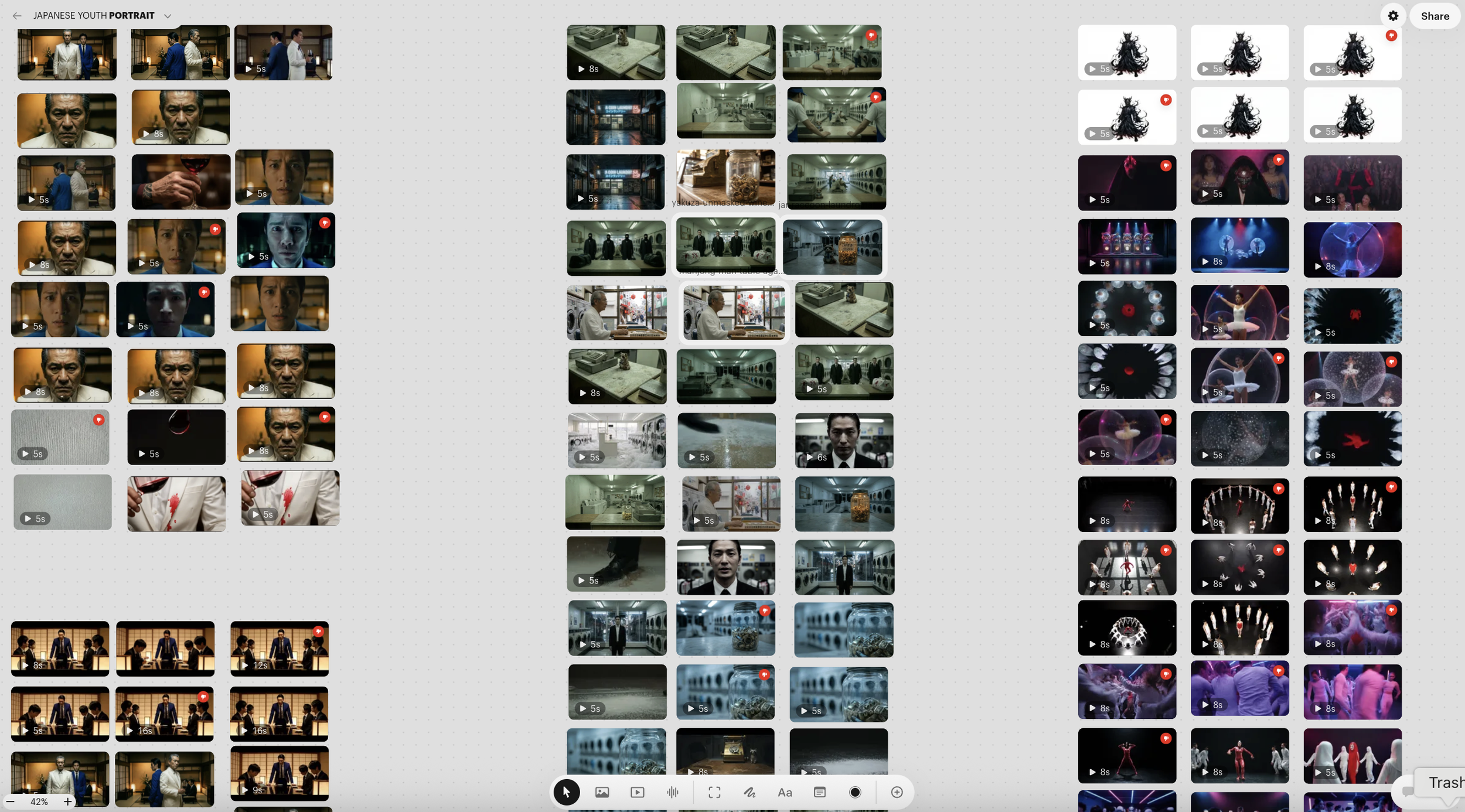
Everything started with a script. From there, I wrote a brief outline of the world-building and tone, and uploaded those documents to Luma’s agents.

Then came the visuals. I started by nailing the look of the characters as stills before moving on to the settings. It took a lot of trial and error to achieve the gritty, lived-in, photorealistic worlds I was imagining, but Luma did a pretty incredible job of matching the aesthetic in my head.

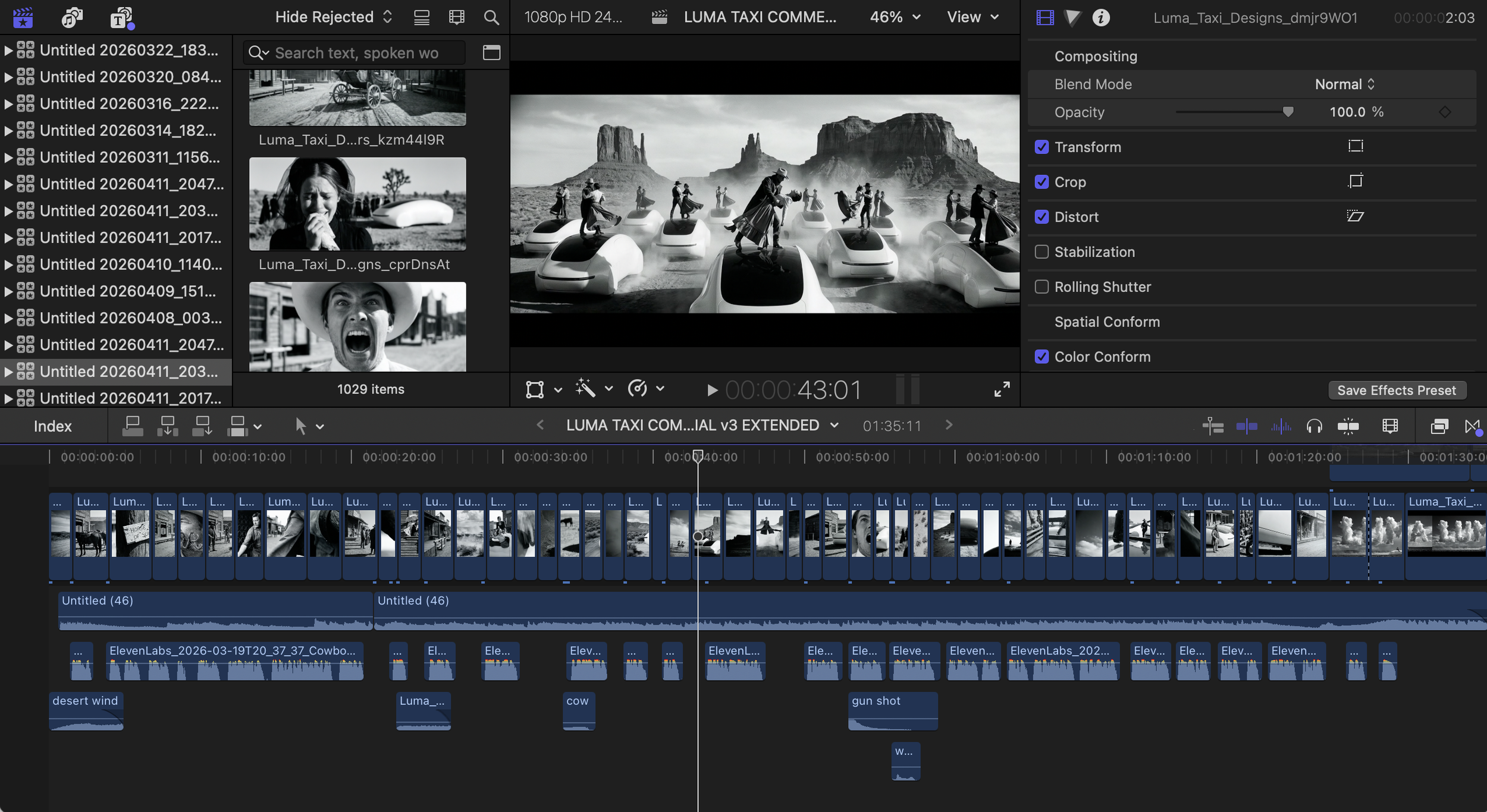
As the visuals developed, I moved into Suno to start working on the music. Because each film plays in a very distinct genre, I had clear guardrails for the sound I wanted. I generated around 15 to 20 tracks, picked my favorites, and dropped them into the timeline on my free trial version of Final Cut Pro.

Once I had a music bed and my early generated footage, I started cobbling together a rough cut
The “Pixar Method” of Gen-AI Directing

My AI directing process is heavily modeled after the Pixar method. In Ed Catmull’s book Creativity, Inc., he lays out a rigorous model for iterating and dialing in animated features. You start with very rough sketches cut together into sequences. Over time, the animation is developed and rendered in higher fidelity, replacing the original sketches. The point is that, from a very early stage, you can start to feel the pulse of your characters and the shape of your film.

I worked the exact same way with these edits.

I watched the rough assemblies over and over, diving into the problem areas, tackling the things that bothered me the most, and making those my priorities. This is where taste comes in. Something that only comes from experience lived and absorbed outside of the prompting box.

Honestly, there were moments I desperately wanted to include that the tools just couldn’t pull off. I wanted snappier back-and-forths between the characters, but AI “actors” aren’t quite there yet. So, I pivoted. I shifted my approach and leaned heavily into visual storytelling.
Iterating in Real-Time

Over the course of a week, I just kept staring at my rough cuts. Once the basic blocks were in place, I started finessing the transitions. Was the music connecting us? Were the cuts satisfying? How could I make it more surprising? These are the exact same questions I’ve been asking for the past 20 years while making commercials the traditional way. So many of those instincts and skills carry over directly into AI; the timeline is just massively compressed. It almost feels like you are rewriting the script over and over again until the film is done.

And in AI, there are no “re-shoots.” If you realize you are missing a shot in the edit, you can generate it and plug it in within minutes.

As the cuts got sharper, I zeroed in on the details. How could I land the end card and the product reveal? Were there facial expressions I wanted to try again? Did I need supporting sound effects? Was the footage getting repetitive? It was time to fine-tune and kill my darlings.
Solving for Story

With Luma Taxi, the spot was entirely driven by the narration. I wanted it to feel like an Old West fable, guided by a gravelly, unreliable narrator telling us exactly how things went down. The voice was designed using ElevenLabs. After about seven variations, I found the exact tone and texture I needed, a voice I definitely want to use again in future projects.

I fine-tuned that voice to match the rhythm of the visuals and the music until it felt seamless. If there was a gap that felt too quiet, I’d write a little more VO to connect the thoughts. My original VO ran long (as they usually do), so I just continued to watch the cut and perfect the narration all the way through production.

With Luma Suds, the trickiest part was executing the opening “problem” trigger: the young yakuza spilling wine on the godfather. I spent dozens of generations trying to crack that scene “in-camera,” but the physics and blocking never worked out. Even when I described exactly what I wanted, the AI actor would do something completely out of pocket, like grabbing the godfather’s arm and violently shaking it to spill the wine. Killing the tension and drama of that moment.

Instead of fighting the physics, I leaned into the reaction shots of the partygoers to tell that part of the story. It actually ended up playing up the gravity and consequence of the moment far better than a direct spill would have.

The Era of Post-Permission Cinema

Looking back at these two spots, the biggest takeaway for me is how much of traditional filmmaking still applies. The tools have changed, but the fundamental need for human instinct hasn’t. For two decades, I’ve relied on taste, timing, and problem-solving to make ideas work. Now, I’m applying those exact same muscles to a generative workflow.

We are stepping into an era of post-permission cinema. You no longer need a massive crew, a sprawling location shoot, or a bloated budget to bring a wild, cinematic idea to life and get it all the way to Cannes. If I had my choice and an unlimited budget, I’d always choose the traditional way. But I am aware that change is coming, and new lanes and forms will emerge from these tools. My approach is to get in there early, deeply learn and test the tools, and help push the boundaries of what is possible.

Most of the early AI work I’ve seen has not been for me. At first, I thought it was just for quick memes and fan fiction featuring Elon Musk. Getting deeper into the tools, I now see that you can make whatever you want. The tech bros will continue making their “Hollywood is cooked” spectacles, but when true artists get behind the keyboard, different tones and voices will be unlocked.

It’s an exciting time for makers. Where your ideas can now go directly into production. No client approvals. No messy group meetings watering things down. No uncomfortable compromises. If you have an idea, you can bring it to life in a very final and polished way. It has collapsed time and stacked disciplines in a way we’ve never seen before.

You just need a laptop, a clear vision, and the willingness to iterate until the story clicks.

The barriers are gone. Now, the only thing you need is a great idea.


Andrew “Oyl” Miller is an advertising Creative Director, Copywriter, and AI Film Director. He spent 15 years working at Wieden+Kennedy on brands like Nike, PlayStation, MLB, Amazon, and IKEA—and is now one of the first people to direct a fully AI-generated commercial for broadcast television. You can follow his insights and updates on his newsletter.

Two Commercials I Directed Are Heading to Cannes

My Luma Dream Brief entries “Luma Taxi” and “Luma Suds” are moving forward as real ads and official Cannes contenders.

I got a fun email this morning.

Two commercials I wrote and directed for the Luma Dream Brief have been selected to run as paid ads, and will officially be entered into the 2026 Cannes Lions. From here, any of the selected ads that win a coveted Gold Lion will split a share of a $1,000,000 prize pot.

The past year has been a grind and a blur in the AI film space. What started as a curiosity quickly gathered momentum. 2026 has seen one of my AI-commercials run on ESPN, and now two more are official ads for Luma AI, and heading to Cannes.

Anyway, here are my spots for Luma, now running as paid ads.

The first, Luma Taxi, takes us to the town of Luma where the horses have gone on strike and autonomous vehicles help the Old West mayhem go without a hitch.

And Luma Suds, the generational yakuza epic meets laundry detergent commercial of my wildest dreams.

Under the Hood: The Hybrid Workflow

For both commercials, I used a hybrid workflow I’ve been developing over the past year. AI filmmaking leverages powerful technology, but the best examples I’ve seen are far from the “just push a button” meme you see in your feeds. There is still a lot of room for human authorship and decisions to be made. Here is how these films were built:

  • Writing as Storyboarding: It starts with rough notes and outlining, which then turn into a draft of a script. I usually start storyboarding at this phase, but I like to do it in writing. I’ll write out dense descriptions of the scenes and moments I have in my head, which naturally evolve into the core prompts.

  • Generating the Blocks: Next, I start generating the key sequences. The prompting and results can still be like rolling a pair of dice, so a lot of re-rolling is involved.

  • The Edit: Once I have the basic building blocks, I drop the clips into Final Cut Pro. From there, I start pulling selects and getting the spine of the story into a rough edit. It’s a lot of back-and-forth with the Luma model to fill in the holes and perfect key moments.

  • Setting the Tone: Early on, I go into Suno AI (a generative music model) to start playing around with the tone of the score. I like to get music on the timeline to edit against. Even if it’s rough, I can always switch it out later with a more crafted version.

  • Voice & Character: For the Luma Taxi spot, I created an original AI narrator in ElevenLabs. It had to be gravelly and period-accurate, a voice with enough authority to make even the absurd sound like a black-and-white legend. I was pleased with how it fit the genre and tone I was going for.

I sat with both edits for a couple of weeks, watching them through and making little tweaks to the timing as I lived with them.

With generative AI, there are always moments you wish turned out differently, or frames you wish matched the exact, specific vision in your head. But like any traditional commercial set with a hard deadline, at some point, you have to let go and put it out there.

I’m excited to have the spots out there and running as real ads. It’s all so surreal, and I already have a number of upcoming projects in the pipeline. Stay tuned.

Andrew “Oyl” Miller is an advertising Creative Director, Copywriter, and AI Film Director. He spent 15 years working at Wieden+Kennedy on brands like Nike, PlayStation, MLB, Amazon, and IKEA—and is now one of the first people to direct a fully AI-generated commercial for broadcast television. You can follow his insights and updates on his newsletter.

How I Became an AI Film Director After 20 Years in Advertising

From Nike campaigns to uncanny valley experiments to an AI commercial on ESPN—how Veo, Luma, and pure obsession unlocked a new way to make films without permission.

Still from Luma Taxi Dream Brief AI commercial. Written, directed, and produced by Andrew “Oyl” Miller. 2026.

For a long time, I stayed away from generative AI video tools.

What I saw in my feeds looked like memes and party tricks.

I’ve spent over two decades in advertising, writing and producing commercials and content for brands like Nike, PlayStation, IKEA, Amazon, and more. I had my routines, my established network, and my way of doing things. I’ve collaborated with and had deep creative discussions with legendary directors like Tony Kaye and Frank Budgen. I’ve been lucky enough to glimpse into a dream world of film, and I fell in love with the craft of it all. Yes, tools and taste are ever-evolving, but I deeply fell into a belief that traditional film techniques are the only way.

But then, last year, Google dropped a generative AI video model called Veo 3. I soon saw a random clip of an AI-generated character speaking, with near-perfect lip-sync.

That was the Big Bang of my rocketing journey through the AI film universe.

Suddenly, a lifetime of imaginary characters and dormant stories flashed through my head. Old directionless fragments and shards of ideas in dusty notebooks suddenly had new life. There was so much inside of me that had never found a proper outlet or received the official industry blessing. But when the sky cracked open, and I saw that a cluster of pixels could approximate life and human-ish performance, the writer in me started shaking. I didn’t know exactly where this was going, but I was suddenly, violently compelled to get these ideas out.

Welcome to the Infinite Sandbox in the Uncanny Valley

I started with the low-hanging fruit: Stormtroopers. As a lifelong Star Wars nerd, placing Stormtroopers into our everyday world was a cheap engine for endless gags. They went camping, they went to Cannes, they went to Burning Man. The possibilities were literally endless. It became a meme. Others jumped on.

But soon, I knew I needed to get my own voice out there. I saw AI not just as a way to create blockbuster spectacle, but as a potential platform for unique writing and voice. So naturally, I dipped into the 1980s.

I started thinking about archaic, crusty baseball coaches who hated the modern game. Men triggered by everything, armed with zero self-awareness and iron-clad beliefs from an ancient era. Being in advertising, I knew a funny character wasn’t enough. I needed a platform. I needed world-building.

That became Deadball Academy. Set in present-day Scottsdale, it’s a facility run by a group of coaches stuck in 1984 who bring in modern baseball prospects and corrupt them with deeply backward instruction. It’s a whole universe with lore and bizarre pockets of backstory. I quickly realized there was a LOT to mine here.

The episodes started writing themselves. Sometimes by hand, sometimes as fragmented dialogue and jokes in a notes app. When I strung together enough lines that made me laugh, I started building prompts. It became a new form of mini-screenwriting: establishing a setting, defining a character description, placing a line of dialogue, dictating the delivery, and always defining the cinematic camera look and movement.

Prompt. Prompt. Prompt.

Judge. Re-write. Edit. Curate.

The characters and voices came flooding back. Some were stuck in the uncanny valley; others looked insanely, undeniably good. Nothing was perfect, but it was allowing me to build a rip-o-matic for a cinematic universe that simply didn’t exist before.

Building in Public (and Becoming the Villain)

Whenever an idea outside of Deadball Academy popped into my head, I pursued it. I leaned into Midjourney to test visual styles. I used Suno to tap into my love of songwriting, generating rough, pounding tracks to score my films. Quickly, I was building up a workflow and stack of tools that let me operate a film studio right at my desk.

All the while, I was building in public.

And the internet reacted exactly how you’d expect. I started getting nasty DMs and anonymous trolls flooding my channels. I get it. AI is polarizing, and like it or not, I’ve become the bad guy to some people. But my curiosity, and the voices demanding to be let out of my head, wouldn’t let me stop. Sorry, not sorry. You don’t last in advertising without developing a bulletproof coping mechanism for intense criticism. I just kept pushing. I hear the voices, and the silent judgement, and I keep going.

I’m not looking for your approval. I’m looking for possibilities.

The Trojan Horse and the Million-Dollar Brief

Then, the inbound interest started.

One of those calls turned into writing and directing my first AI commercial, for cybersecurity start-up Proofpoint, which actually aired on ESPN. That is still an insane sentence to write, but it’s internet fact now. I’ve got the receipts. I partnered with the visionary team at ONLYCH1LD, and their openness to this new form was infectious. I even made a bonkers BTS gag reel using the “lead actor” from the Proofpoint spot, CLIFF DATAMAN. Yet another exercise in using the tools for world-building. I just keep leaning into the tangents I find most interesting.

Right around that time, an old Wieden+Kennedy colleague reached out about the Luma Dream Brief.

The AI film contest from Luma AI asked AI directors to use the Luma model to make an ad for a fictional Luma-branded product. Entries would go before a panel of advertising, film, and creative industry legends. Their picks would then be run as real ads for Luma, and officially submitted to Cannes Lions.

I’m not an awards hound, but I recognize how they contribute to career momentum. The thought of creating breakthrough work in an emerging film category was a strong motivation. On top of that, the contest also offered a one-million-dollar prize if the AI commercial ends up winning a Gold Lion.

As someone who has had some of my best work not given the blessing to submit to Cannes and other festivals, for weird, internal political reasons, the idea of no gatekeepers and a chance at entry appealed to me. Gatekeepers in advertising can be brutal. This contest arrived at the exact right time, offering a clean path to submit something with my uncompromised vision directly to Cannes, complete with a shot at a million dollars.

I dove into Luma’s tools and quickly built up a series of spots. What Luma did was validate my deepest belief: the best idea can come from anywhere. Committees, meetings, and endless feedback loops obfuscate that truth. Luma provided a cheat code to circumvent the murky layers of the industry. No feedback. No hidden agendas. No rubber stamps.

Just a clean shot.

If someone wanted to pair a multi-generational yakuza epic with a hard sell for laundry detergent, no one could stand in the way.

What’s Next?

This is where I stand in 2026. Turning a new page, letting my curiosity drive the way.

I will keep pushing, refining, and mastering these tools. But more importantly, I am looking to push beyond advertising. I’m looking to formalize series and put my voice out there in bigger, longer, more ambitious ways.

I have drafts of screenplays and novels waiting in the wings. I now see a world where AI filmmaking bridges the gap between a written page and a green light that I’ve been chasing for years at the end of a long and winding tunnel. Proof of concepts. Opening scenes. Theatrical trailers. That is the new brief.

My mission statement is this: I will keep making things that no one is asking for.

How can I use AI not just to increase my output or be more efficient, but to truly amplify my voice and get my stories made? It’s a crazy dream. It’s a lonely road. But the curiosity and possibilities keep me building. Studio Oyl.

What that means is I’m just a guy at a laptop, letting my fingers do the dreaming.

Andrew “Oyl” Miller is an advertising Creative Director, Copywriter, and AI Film Director. He spent 15 years working at Wieden+Kennedy on brands like Nike, PlayStation, MLB, Amazon, and IKEA—and is now one of the first people to direct a fully AI-generated commercial for broadcast television. You can check out his work on his website.