My Luma Dream Brief entries “Luma Taxi” and “Luma Suds” are moving forward as real ads and official Cannes contenders.
I got a fun email this morning.
Two commercials I wrote and directed for the Luma Dream Brief have been selected to run as paid ads, and will officially be entered into the 2026 Cannes Lions. From here, any of the selected ads that win a coveted Gold Lion will split a share of a $1,000,000 prize pot.
The past year has been a grind and a blur in the AI film space. What started as a curiosity quickly gathered momentum. 2026 has seen one of my AI-commercials run on ESPN, and now two more are official ads for Luma AI, and heading to Cannes.
Anyway, here are my spots for Luma, now running as paid ads.
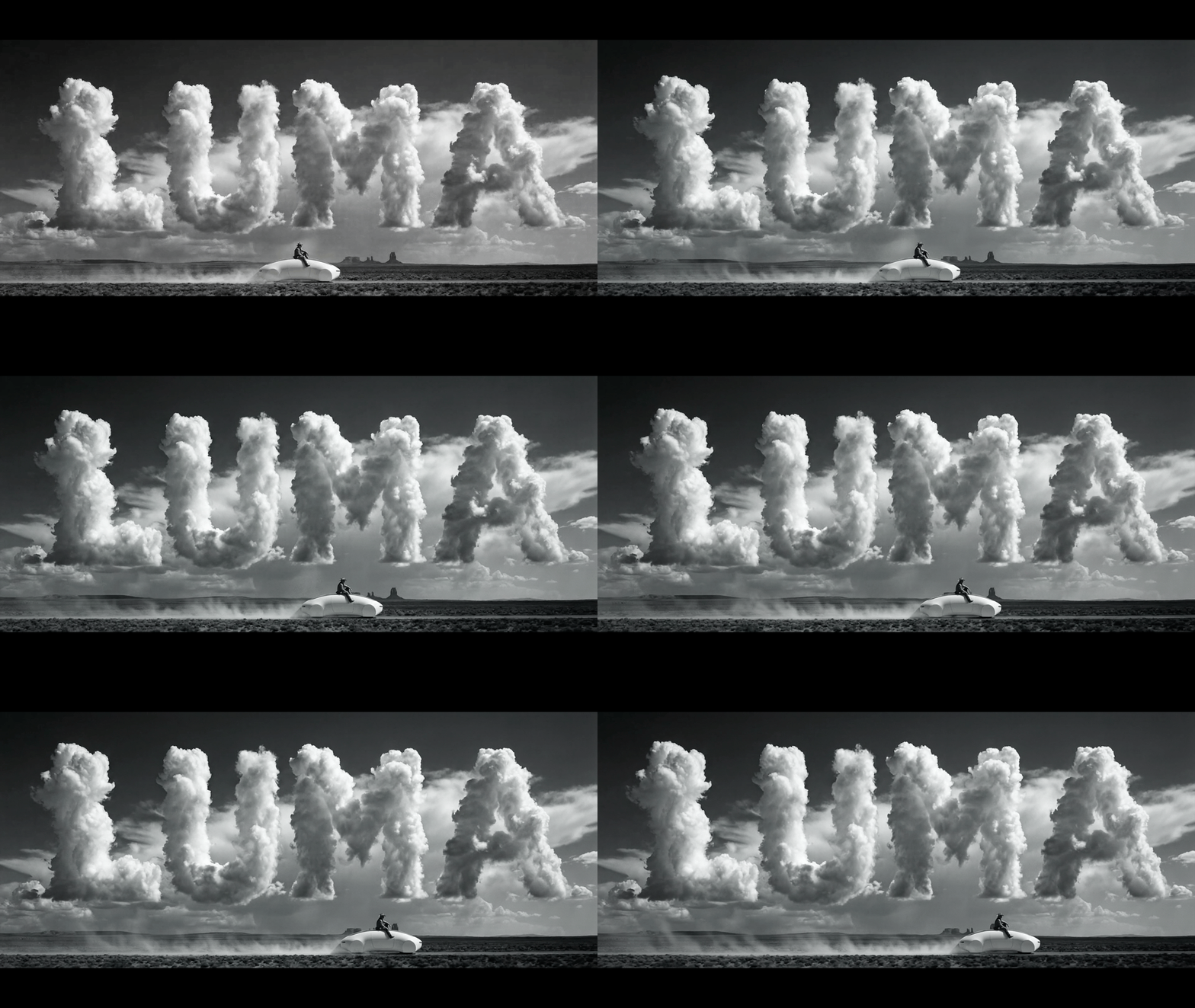
The first, Luma Taxi, takes us to the town of Luma where the horses have gone on strike and autonomous vehicles help the Old West mayhem go without a hitch.
And Luma Suds, the generational yakuza epic meets laundry detergent commercial of my wildest dreams.
Under the Hood: The Hybrid Workflow
For both commercials, I used a hybrid workflow I’ve been developing over the past year. AI filmmaking leverages powerful technology, but the best examples I’ve seen are far from the “just push a button” meme you see in your feeds. There is still a lot of room for human authorship and decisions to be made. Here is how these films were built:
Writing as Storyboarding: It starts with rough notes and outlining, which then turn into a draft of a script. I usually start storyboarding at this phase, but I like to do it in writing. I’ll write out dense descriptions of the scenes and moments I have in my head, which naturally evolve into the core prompts.
Generating the Blocks: Next, I start generating the key sequences. The prompting and results can still be like rolling a pair of dice, so a lot of re-rolling is involved.
The Edit: Once I have the basic building blocks, I drop the clips into Final Cut Pro. From there, I start pulling selects and getting the spine of the story into a rough edit. It’s a lot of back-and-forth with the Luma model to fill in the holes and perfect key moments.
Setting the Tone: Early on, I go into Suno AI (a generative music model) to start playing around with the tone of the score. I like to get music on the timeline to edit against. Even if it’s rough, I can always switch it out later with a more crafted version.
Voice & Character: For the Luma Taxi spot, I created an original AI narrator in ElevenLabs. It had to be gravelly and period-accurate, a voice with enough authority to make even the absurd sound like a black-and-white legend. I was pleased with how it fit the genre and tone I was going for.
I sat with both edits for a couple of weeks, watching them through and making little tweaks to the timing as I lived with them.
With generative AI, there are always moments you wish turned out differently, or frames you wish matched the exact, specific vision in your head. But like any traditional commercial set with a hard deadline, at some point, you have to let go and put it out there.
I’m excited to have the spots out there and running as real ads. It’s all so surreal, and I already have a number of upcoming projects in the pipeline. Stay tuned.


Andrew “Oyl” Miller is an advertising Creative Director, Copywriter, and AI Film Director. He spent 15 years working at Wieden+Kennedy on brands like Nike, PlayStation, MLB, Amazon, and IKEA—and is now one of the first people to direct a fully AI-generated commercial for broadcast television. You can follow his insights and updates on his newsletter.