Twenty years of making ads the traditional way, and why AI didn’t change the job.
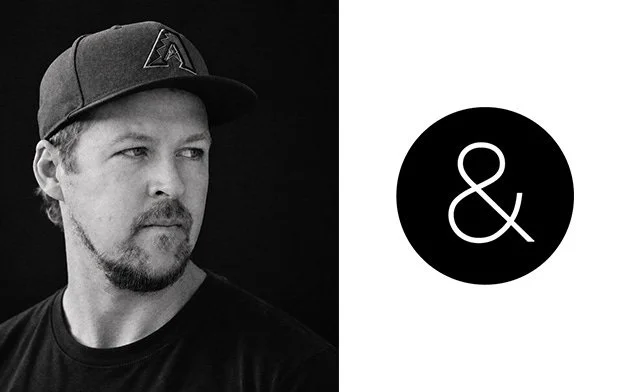
Well, this is new.
A couple of years ago, I started playing around with generative AI video. Today I am signed with one of the premier production companies in advertising and narrative, Arts & Sciences.
The first year with the tools was purely personal curiosity. I’d heard all the doomscrolling headlines and decided I needed some first-hand experience. I wasn’t going to form my opinion based on a few loud voices coming from so-called experts.
Was it really as easy as telling an AI to make you a movie and then pressing a button?
Within ten minutes, I realized there was a whole lot more going on than the sensational headlines let on. I drew on my twenty years of making commercials and short films “the traditional way" and started figuring out what skills transferred to this emerging medium.
In time, I learned that you can go as deep as you want.
Much of the AI slop that fills our feeds really is press-a-button-and-play-the-slot-machine. The tech bros proclaiming that advertising and Hollywood are dead are mostly just putting out tech demos. There is no taste or track record behind them. You can exercise as much judgement and taste as you want. When creators haven’t done the work or lived in the production trenches, it’s easy to be dazzled by a slick-looking 4K output.
But you can exercise as much judgement and taste as you want. If you want to be rigorous about casting, location scouting, camera moves, lenses, lighting, art direction, set design and color palette, there are ways to apply serious craft to AI film.
Once I got deep enough in the weeds with these test films, I realized that I was actually building my reel. Jobs started coming. Interesting conversations took place.
I ended up fully writing and directing a 30-second commercial for Proofpoint that aired nationally on ESPN. Soon after came the Luma Dream Brief, where two of my films were selected and run as official commercials. In the process, they both earned a rare double entry into Cannes Lions. That exposure put my emerging body of work in front of CCOs, executive producers, brands and agencies. More emails followed.
Eventually, this led me to talks with Mal Ward of Arts & Sciences. We connected right away. Mal didn’t approach me with hype or a sales pitch. Instead, he laid out a really strategic, ambitious and open-minded vision of how the industry might evolve, ranging from hybrid productions to fully-AI led broadcast campaigns. It was exciting and we bonded quickly.
Last week, I officially joined the Arts & Sciences roster as a director for their AI-forward arm, Arts & Intelligence. It’s a great honor and validation of something I’ve been building towards.
In my conversations with people around AI film, I keep thinking back to a moment with David Kennedy years ago. We were both huddled over a cutting board in the Wieden+Kennedy Portland office, each hand-cutting type for different projects. You could tell he was heartened to see a young creative doing something by hand. We worked side by side quietly until he said, “I remember when art directors started using Photoshop. That’s when I knew it was time to retire.”
It made sense coming from a man who came up in the golden age of Chicago blue-collar advertising, then went on to co-found Wieden+Kennedy and cement Nike’s original aesthetic with gorgeous, precise print ads.
Around the same time, I was having talks with Hal Curtis, another legendary Wieden creative director on Nike, who saw Photoshop and design programs as tools. Hal is as deep on craft and taste as they come. He made a point of encouraging me to “get off the computer” and gather real-life experiences and inspiration, so when you do come back to your tools, there’s depth and nuance to draw on.
When AI started popping up, I flashed back to those conversations. AI as a tool for human authorship made sense to me. You can apply your personal POV, taste and craft. How do I know? Pay attention and you’ll see that not all AI films are created equal. Like anything, there is an elite 1% that is clearly better. Those creators are bringing something extra to the table. That’s what interests me.
For my entire two decades in advertising, the cynical voices have shouted that advertising is dead. First it was “digital.” Now it’s AI. In each era, advertising didn’t die. It expanded, and with it came a new, obvious way to be mediocre by making it easy to cut corners and shortcut the craft. But every year was filled with work that forged new paths. That’s the stuff we remember.
Since when has advertising or Hollywood ever batted a thousand?
So, here’s to the future. The future of advertising. The future of Hollywood.
May it not be binary, black and white. May it be filled with curiosity and individuality. May human voices keep finding brave and inventive ways to show us something we haven’t seen.
Somewhere between Kennedy’s X-Acto blade and today’s prompts, the job never really changed. Find something true. Care about it deeply. Put your name on it.
I’ve felt the support and criticism for what I’m doing rise at the same time. People have told me to stop, and that it’s not a good look. They’ve told me to put down the tools. But when has a creative ever done what they’re told? It just adds fuel to the fire.
For every troll in my comments and DMs, there are supporters and co-conspirators. It’s time to get back to work and make something worth remembering.
View my reel on Art & Sciences and my directing website.
Follow my Instagram here.
Press
LBB Online: Arts & Sciences Signs AI Director Oyl Miller to Its Arts & Intelligence Roster
Roastbrief: Arts & Sciences Signs AI Director Oyl Miller to Its Arts & Intelligence Roster
Ad Age: 21 AI-Generated Spots From Luma’s ‘Dream Brief’ Will Chase Gold in Cannes
LBB Online: Andrew “Oyl” Miller Blends Absurd Humour With Bold Visual Storytelling
Ads of the World: Proofpoint – Secure Every Interaction Across People, Data, and AI Agents